Skip to content
wallet.dat and Legacy Wallet File Recovery - Crypto Wallet Recovery New Zealand

wallet.dat recovery

wallet.dat and Legacy Wallet File Recovery

Legacy wallet file identification, repair and key extraction

Before BIP-39 recovery phrases existed, wallet key material lived in proprietary file formats on local storage, and those keys never expire. A private key generated in 2011 controls its coins exactly as it did the day it was made. Recovery is a file problem, not a blockchain one: the obstacle is identifying the exact format and version, working only on a copy, and either repairing structural corruption or opening the encryption where a password was set. The keys are almost always still intact inside the file. The blockchain confirms what remains before any work is quoted.

10%recovery fee
Only charged on successful recovery

Meet the team

Meet our recovery experts

A team built on years of experience across New Zealand's most complex crypto matters.

Our methods

How we recover a wallet.dat file

Every recovery is methodical and fully offline. Your key material never leaves our air-gapped equipment, and the work happens in an environment of your choosing.

Format identification and safe handling

Determining exactly what a file contains before any modification touches it.

  • The same wallet.dat filename covers several different internal structures across client versions
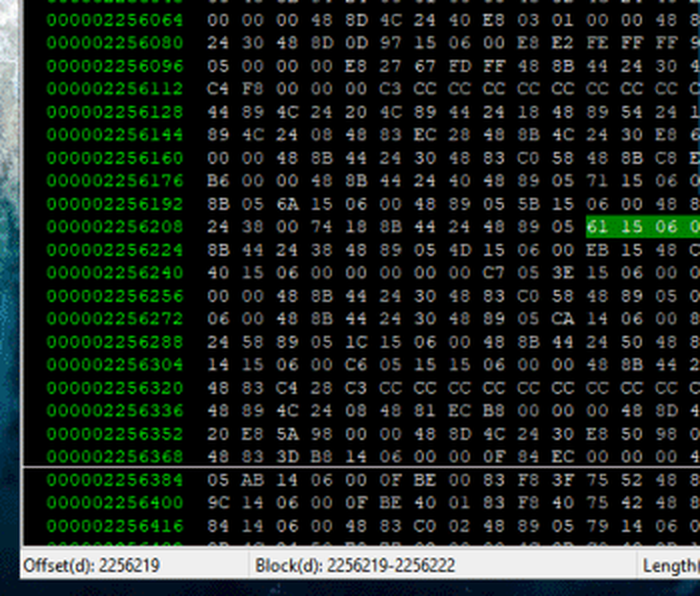
  • Bitcoin Core wallet.dat files are Berkeley DB databases, which appear as unreadable binary and corrupt easily if edited directly
  • Armory, MultiBit Classic, MultiBit HD, and Electrum formats each identified and distinguished
  • Client software and version determined before any extraction begins
  • All work performed on a forensic copy, with the original never modified
  • Correct tooling selected per format, since each stores keys differently

Structural repair and partial extraction

Recovering key material from files damaged by failing media or repeated copying.

  • Structural repair of files pulled from failing drives, bad sectors, or corrupted copies
  • Partial or truncated files often still yield complete, usable private keys
  • Corrupted regions isolated from intact key material rather than discarding the whole file
  • Armory's built-in checksums leveraged, which auto-correct single-byte storage errors by design
  • Original media left untouched where the file still resides on its source drive
  • Extraction attempted in full before any file is declared unrecoverable

Encryption and password recovery

Opening password-protected legacy wallet files through targeted, offline search.

  • Format-specific encryption parameters read directly from the file before testing begins
  • Only the encrypted master key or a key fragment extracted for testing, never the funds themselves
  • Bitcoin Core's older key derivation is comparatively fast to work through at high candidate rates
  • Habit-based candidate generation, the same targeted method used in wallet password recovery
  • Feasibility assessed honestly from how much you remember about the original password
  • All password testing performed offline on air-gapped equipment

Key extraction and verification

Pulling the private keys out once the file is open and confirming what they hold.

  • Private keys extracted cleanly once the file is accessible
  • Each key verified against its on-chain address and balance history before anything moves
  • The specific address types and derivation confirmed for pre-SegWit and legacy structures
  • On-chain balance confirmed before the engagement is quoted, so you know what is actually there
  • The full contents of a multi-key file enumerated, not just the first address

Modern migration

Moving recovered keys into a current, supported wallet.

  • Funds migrated into a current wallet you control, with no reason to keep an abandoned client running
  • Legacy address structures rebuilt where modern software will not reconstruct them by default
  • Migration completed on air-gapped equipment
  • Extracted keys and working copies destroyed or returned at handover, nothing retained
  • Guidance on modern backup so the same file dependency does not recur

Balance verification before work

Establishing there is something to recover before you commit to anything.

  • The wallet's addresses checked against the blockchain before any quote is given
  • A clear distinction drawn between an empty wallet and an inaccessible one
  • Historic spends and partial balances mapped, since a wallet believed empty is sometimes not
  • An honest read on whether the file is worth opening, given what the chain shows
  • No fee proposed on a file that holds nothing

Failure modes

Failure modes we handle

  • wallet.dat found on a drive from the early 2010s

    The classic case. Check the address on a block explorer first, then talk to us about opening it. The keys inside have not aged a day.

  • Bitcoin Core will not load the wallet file

    Version incompatibility or file corruption. Both are usually repairable, and neither means the keys are gone.

  • Armory wallet with software that no longer runs

    The client is effectively abandoned, but the key material inside remains fully extractable without it.

  • MultiBit wallet that modern software will not import

    MultiBit used its own bitcoinj-based format that current wallets do not read. The keys are recoverable through conversion.

  • Wallet file present but structurally damaged

    Partial extraction is frequently possible. A corrupted file is not the same as a lost one.

  • A wallet.dat that opens but demands a forgotten password

    A password problem layered on a file problem. We extract the key material needed to test candidates offline, without risking the funds.

A recent case like this one

View all case studies
  • 1 BTCrecovered

    October 2025

    Legacy wallet.dat extraction

    2015 wallet with a partial historic breach

    A 2015-era Bitcoin wallet had been breached years earlier. The owner wrote it off as empty; 0.4 BTC had left, but 1 BTC was still sitting in a legacy structure modern software would not rebuild by default. We mapped the on-chain history to prove what remained, rebuilt the pre-SegWit wallet layout, verified the address match, and migrated the balance to a current secure wallet.

Scam Warning

Most “crypto recovery” services are scams

If someone contacts you first about recovering your crypto, it's a scam - we only ever work with people who come to us. The rest ask for payment upfront, promise results nobody can promise, and want your recovery phrase typed into a website. Scammers also trade lists of people who've responded before, which is often how they found you.

You'll hear back from Nic or Harry directly - not a call centre. Beware of scammers.

Contact us

Describe your situation in general terms - no recovery phrases or private keys through this form. We will call you back within 24 hours with an honest read on whether wallet.dat recovery is possible in your case.

  • No fee unless we succeed

    10% of what's recovered, agreed in writing beforehand. Nothing if we fail.

  • We can come to you

    Anywhere in New Zealand, at our cost, for cases of significant value.

  • Nothing is retained

    Keys and phrases are destroyed or returned at the end of the engagement. NDA signed before we start.

Never send a recovery phrase or private key through this form, or through any website. Describe the situation in general terms and we will handle the sensitive detail securely on the call.

No fee unless we succeed. We respond within 24 hours.

FAQ

wallet.dat recovery - common questions

I found an old drive with a wallet file. What should I do first?

Do not run the old software or copy the file around more than necessary, and never upload it anywhere. Make a copy, leave the original alone, and check the wallet's addresses on a block explorer if you know them. Then talk to us. Handling the file carelessly is the main avoidable way old wallets get damaged.

Can you tell me if there's anything in it before I pay?

Yes, and we insist on it. The blockchain shows what a wallet's addresses hold regardless of whether the file will open, so we confirm there is a balance worth recovering before any work is quoted. We do not charge to open an empty wallet.

Is a 2011 wallet really still valid?

Yes. Private keys do not expire. A key generated in 2011 controls its coins today exactly as it did then. The only obstacle is getting into the file that holds it, which is what this work is.

The file opens but asks for a password I don't remember. Can you still help?

Yes. That becomes a password recovery problem on top of the file work. We extract only the material needed to test password candidates offline, so your funds are never exposed during the search, and older wallet formats are comparatively fast to work through.

My wallet.dat looks like gibberish in a text editor. Is it corrupted?

Almost certainly not. A wallet.dat is a Berkeley DB binary file and is supposed to look like nonsense in a text editor. Opening it that way can actually damage it, which is why the file should only be handled with the correct tools on a copy.

Do you need my original wallet software or my old computer?

No. The keys are inside the file itself, and we work from the file directly using format-appropriate tools. The original client, and the machine it ran on, are not required.

How is this different from the online "wallet.dat openers" I've seen?

Anything asking you to upload your wallet.dat to a website is a scam, and a dangerous one, because that file is your funds. Legitimate recovery works from a copy on offline, air-gapped hardware, never on someone else's server.